Running Takes the Edge Off. Boxing Changes Your Brain.
Running Takes the Edge Off. Boxing Changes Your Brain.
Why combat sports do something for anxiety and depression that no other training can replicate — and the neuroscience that explains it.
There’s a version of anxiety that doesn’t look like panic attacks or trembling hands. It looks like snapping at your partner over nothing. It looks like a chest that’s permanently tight. It looks like lying awake at 2am rehearsing a conversation that happened three days ago.
Most people manage that feeling with Netflix, alcohol, or a run they talked themselves into. And while those things take the edge off, they’re not rewiring anything. They’re just turning the volume down temporarily.
Combat sports — boxing, in particular — does something different. Something structural. Something that gets inside the architecture of your stress response and changes it from the inside out.
Here’s why.
Your Brain Grows New Connections When You Train
BDNF. Brain-Derived Neurotrophic Factor. It’s sometimes called “Miracle-Gro for the brain,” and that nickname undersells it.
BDNF is a protein your brain produces in response to specific types of stress. It doesn’t just keep existing neurons healthy — it triggers the formation of entirely new neural connections. New pathways. New circuitry. It’s the biological mechanism behind neuroplasticity: your brain’s ability to change, adapt, and reorganise itself.
Aerobic exercise raises BDNF. That’s well established. But combat sports training raises it at a significantly higher rate — and for a very specific reason. It’s not just the physical output. It’s the cognitive load running simultaneously with that physical output.
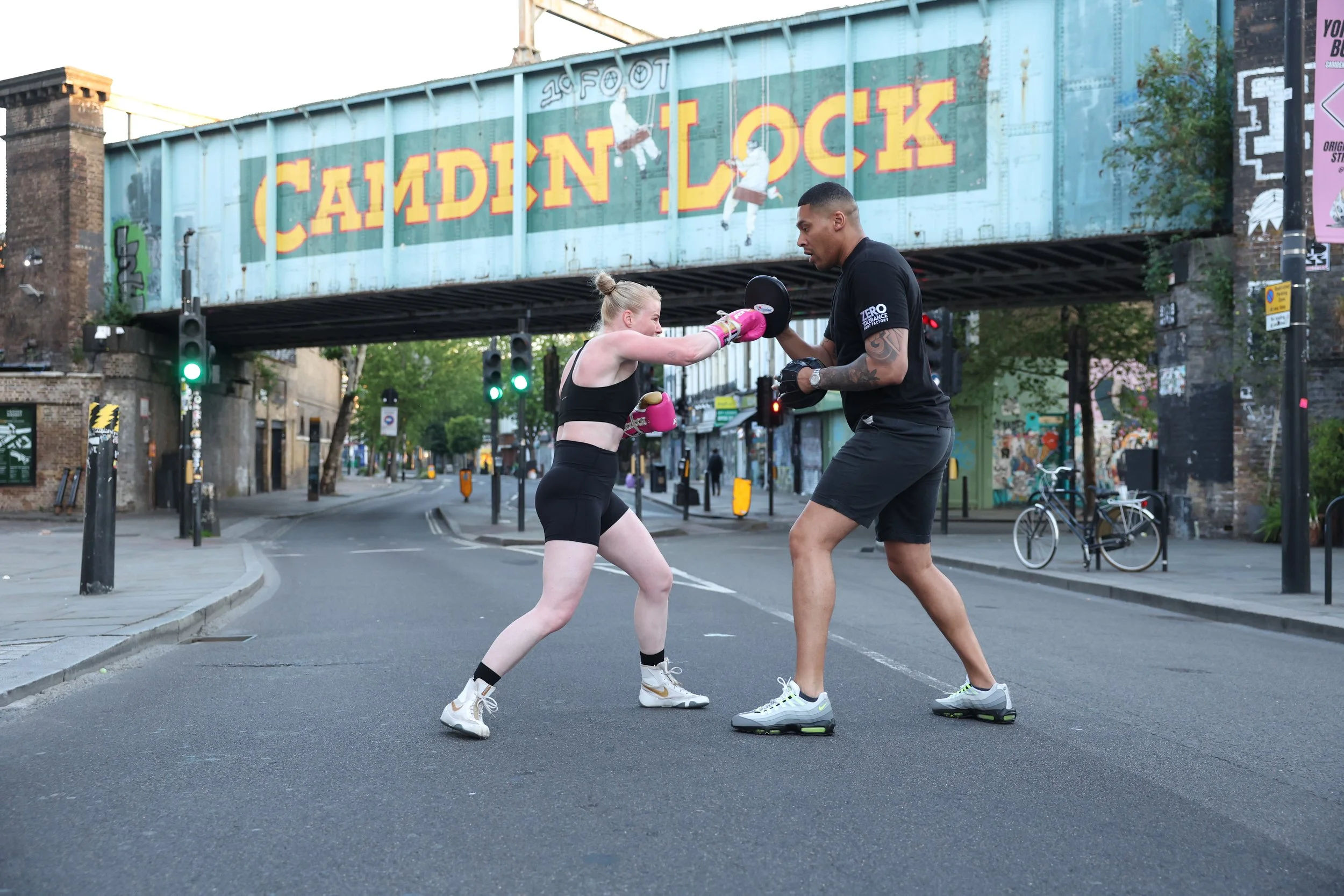
When you’re working combinations on the pads, or sparring, or drilling footwork under fatigue — your brain is doing something no treadmill asks of it. It’s processing threat, managing emotion, executing motor patterns, reading another person’s body, and making split-second decisions, all at the same time, all under pressure.
That layered demand creates a far more potent neurological stimulus. The BDNF response is stronger. The neural growth is more pronounced. You are, quite literally, building a better brain.
The Amygdala Problem — And How Boxing Solves It
Your amygdala is your threat-detection system. It’s ancient, fast, and not particularly intelligent. Its job is to scan the environment for danger and trigger a stress response before your rational brain has had time to catch up.
This was useful when danger meant a predator. It’s less useful when danger means an email from your boss or a difficult conversation at home.
In people who experience chronic anxiety, the amygdala is essentially hyperactive. It fires constantly. It flags non-threats as threats. And because the stress response it triggers feels real — heart rate up, breath shallow, body tense — the nervous system believes it.
Combat sports training conditions the amygdala to recalibrate
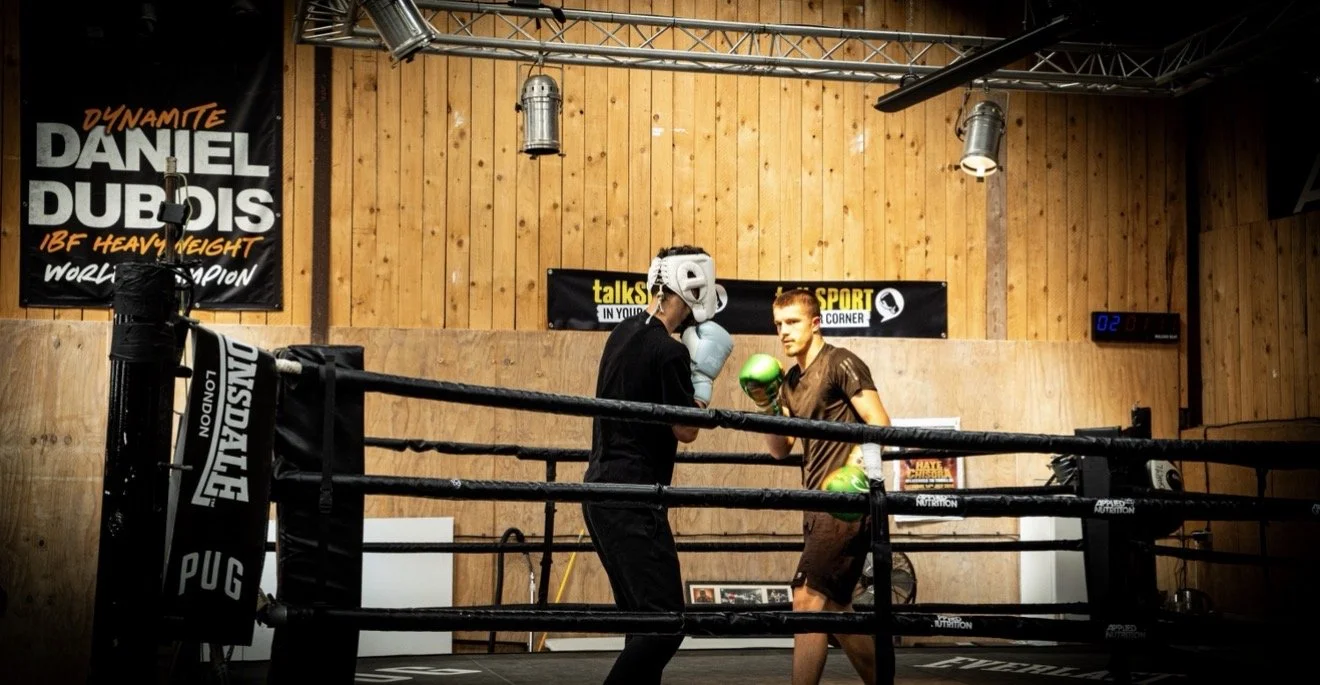
Here’s the mechanism: every time you step onto the mats or into the ring, your amygdala fires. The threat is real — there’s another person in front of you, there are punches coming, your body is under genuine pressure. But you don’t run. You don’t freeze. You regulate. You breathe. You execute. You stay in it.
Over time, repeated exposure to that real, managed threat teaches the amygdala a different lesson. Arousal is not the same as danger. Pressure is not the same as collapse. I can function in this state.
That recalibration doesn’t stay in the gym. It travels. The same nervous system that learned to stay composed under a jab combination is the same nervous system that faces a difficult confrontation at work, a spike of social anxiety, or the creeping dread of an uncertain situation. The baseline shifts. The threshold for panic rises.
You trained it to be better.
Running Takes the Edge Off. Boxing Changes Your Brain.
Why combat sports do something for anxiety and depression that no other training can replicate — and the neuroscience that explains it.
There’s a version of anxiety that doesn’t look like panic attacks or trembling hands. It looks like snapping at your partner over nothing. It looks like a chest that’s permanently tight. It looks like lying awake at 2am rehearsing a conversation that happened three days ago.
Most people manage that feeling with Netflix, alcohol, or a run they talked themselves into. And while those things take the edge off, they’re not rewiring anything. They’re just turning the volume down temporarily.
Combat sports — boxing, in particular — does something different. Something structural. Something that gets inside the architecture of your stress response and changes it from the inside out.
Here’s why.
Your Brain Grows New Connections When You Train
BDNF. Brain-Derived Neurotrophic Factor. It’s sometimes called “Miracle-Gro for the brain,” and that nickname undersells it.
BDNF is a protein your brain produces in response to specific types of stress. It doesn’t just keep existing neurons healthy — it triggers the formation of entirely new neural connections. New pathways. New circuitry. It’s the biological mechanism behind neuroplasticity: your brain’s ability to change, adapt, and reorganise itself.
Aerobic exercise raises BDNF. That’s well established. But combat sports training raises it at a significantly higher rate — and for a very specific reason. It’s not just the physical output. It’s the cognitive load running simultaneously with that physical output.
When you’re working combinations on the pads, or sparring, or drilling footwork under fatigue — your brain is doing something no treadmill asks of it. It’s processing threat, managing emotion, executing motor patterns, reading another person’s body, and making split-second decisions, all at the same time, all under pressure.
That layered demand creates a far more potent neurological stimulus. The BDNF response is stronger. The neural growth is more pronounced. You are, quite literally, building a better brain.
The Amygdala Problem — And How Boxing Solves It
Your amygdala is your threat-detection system. It’s ancient, fast, and not particularly intelligent. Its job is to scan the environment for danger and trigger a stress response before your rational brain has had time to catch up.
This was useful when danger meant a predator. It’s less useful when danger means an email from your boss or a difficult conversation at home.
In people who experience chronic anxiety, the amygdala is essentially hyperactive. It fires constantly. It flags non-threats as threats. And because the stress response it triggers feels real — heart rate up, breath shallow, body tense — the nervous system believes it.
Combat sports training conditions the amygdala to recalibrate.
Here’s the mechanism: every time you step onto the mats or into the ring, your amygdala fires. The threat is real — there’s another person in front of you, there are punches coming, your body is under genuine pressure. But you don’t run. You don’t freeze. You regulate. You breathe. You execute. You stay in it.
Over time, repeated exposure to that real, managed threat teaches the amygdala a different lesson. Arousal is not the same as danger. Pressure is not the same as collapse. I can function in this state.
That recalibration doesn’t stay in the gym. It travels. The same nervous system that learned to stay composed under a jab combination is the same nervous system that faces a difficult confrontation at work, a spike of social anxiety, or the creeping dread of an uncertain situation. The baseline shifts. The threshold for panic rises.
You trained it to be better.
Emotion Regulation — The Skill Nobody Talks About
One of the most underrated outcomes of boxing training has nothing to do with fitness. It’s emotional regulation under genuine physiological stress.
Most emotional regulation techniques ask you to practise when you’re calm. Breathe slowly. Journal. Meditate. These tools have value — but they have a ceiling. When your body is flooded with adrenaline, those calm-state skills frequently fail because they were never tested under real pressure.
Boxing tests them constantly.
You learn very quickly in this sport that panic is expensive. If you lose emotional control while sparring — if you get rattled, if frustration takes over, if fear tightens everything up — your technique collapses immediately. You can’t hide it. The consequence is immediate and undeniable.
So you learn. You learn to breathe through the discomfort instead of bracing against it. You learn to reset after a bad exchange rather than spiral. You learn that your emotional state is a choice, even when your heart is running at 170bpm and someone is trying to hit you in the face.
That’s not a metaphor for handling stress. That is handling stress — the real kind, the kind your nervous system actually responds to. And because you’ve practised it in that environment, you can access it in any environment.
Running Takes the Edge Off. Boxing Changes Your Brain.
Why combat sports do something for anxiety and depression that no other training can replicate — and the neuroscience that explains it.
There’s a version of anxiety that doesn’t look like panic attacks or trembling hands. It looks like snapping at your partner over nothing. It looks like a chest that’s permanently tight. It looks like lying awake at 2am rehearsing a conversation that happened three days ago.
Most people manage that feeling with Netflix, alcohol, or a run they talked themselves into. And while those things take the edge off, they’re not rewiring anything. They’re just turning the volume down temporarily.
Combat sports — boxing, in particular — does something different. Something structural. Something that gets inside the architecture of your stress response and changes it from the inside out.
Here's why.
Your Brain Grows New Connections When You Train
BDNF. Brain-Derived Neurotrophic Factor. It’s sometimes called “Miracle-Gro for the brain,” and that nickname undersells it.
BDNF is a protein your brain produces in response to specific types of stress. It doesn’t just keep existing neurons healthy — it triggers the formation of entirely new neural connections. New pathways. New circuitry. It’s the biological mechanism behind neuroplasticity: your brain’s ability to change, adapt, and reorganise itself.
Aerobic exercise raises BDNF. That’s well established. But combat sports training raises it at a significantly higher rate — and for a very specific reason. It’s not just the physical output. It’s the cognitive load running simultaneously with that physical output.
When you’re working combinations on the pads, or sparring, or drilling footwork under fatigue — your brain is doing something no treadmill asks of it. It’s processing threat, managing emotion, executing motor patterns, reading another person’s body, and making split-second decisions, all at the same time, all under pressure.
That layered demand creates a far more potent neurological stimulus. The BDNF response is stronger. The neural growth is more pronounced. You are, quite literally, building a better brain.
The Amygdala Problem — And How Boxing Solves It
Your amygdala is your threat-detection system. It’s ancient, fast, and not particularly intelligent. Its job is to scan the environment for danger and trigger a stress response before your rational brain has had time to catch up.
This was useful when danger meant a predator. It’s less useful when danger means an email from your boss or a difficult conversation at home.
In people who experience chronic anxiety, the amygdala is essentially hyperactive. It fires constantly. It flags non-threats as threats. And because the stress response it triggers feels real — heart rate up, breath shallow, body tense — the nervous system believes it.
Combat sports training conditions the amygdala to recalibrate.
Here’s the mechanism: every time you step onto the mats or into the ring, your amygdala fires. The threat is real — there’s another person in front of you, there are punches coming, your body is under genuine pressure. But you don’t run. You don’t freeze. You regulate. You breathe. You execute. You stay in it.
Over time, repeated exposure to that real, managed threat teaches the amygdala a different lesson. Arousal is not the same as danger. Pressure is not the same as collapse. I can function in this state.
That recalibration doesn’t stay in the gym. It travels. The same nervous system that learned to stay composed under a jab combination is the same nervous system that faces a difficult confrontation at work, a spike of social anxiety, or the creeping dread of an uncertain situation. The baseline shifts. The threshold for panic rises.
You trained it to be better.
Emotion Regulation — The Skill Nobody Talks About
One of the most underrated outcomes of boxing training has nothing to do with fitness. It’s emotional regulation under genuine physiological stress.
Most emotional regulation techniques ask you to practise when you’re calm. Breathe slowly. Journal. Meditate. These tools have value — but they have a ceiling. When your body is flooded with adrenaline, those calm-state skills frequently fail because they were never tested under real pressure.
Boxing tests them constantly.
You learn very quickly in this sport that panic is expensive. If you lose emotional control while sparring — if you get rattled, if frustration takes over, if fear tightens everything up — your technique collapses immediately. You can’t hide it. The consequence is immediate and undeniable.
So you learn. You learn to breathe through the discomfort instead of bracing against it. You learn to reset after a bad exchange rather than spiral. You learn that your emotional state is a choice, even when your heart is running at 170bpm and someone is trying to hit you in the face.
That’s not a metaphor for handling stress. That is handling stress — the real kind, the kind your nervous system actually responds to. And because you’ve practised it in that environment, you can access it in any environment.
Why Running and Lifting Can’t Do This
Running is excellent. Weight training is excellent. Both carry significant benefits for mental health, and neither should be dismissed.
But they don’t do this.
A long run will raise your BDNF. It will not train your amygdala under threat. It will not teach you to regulate emotion while someone is actively trying to get past your guard. It will not force you to solve a moving, reactive, unpredictable problem while your lungs are burning and your legs are heavy.
Weightlifting creates physical stress and demands focus. But the focus it demands is internal — technique, breathing, rep count. There is no external variable pushing back at you. No one is reading your movements and responding in real time.
Combat sports uniquely combine aerobic intensity, cognitive complexity, interpersonal threat, and required emotional output — all simultaneously. That combination is the mechanism. That’s what makes the neurological effect categorically different.
It’s not that other training is inferior. It’s that this training is doing something they simply cannot replicate.
Running Takes the Edge Off. Boxing Changes Your Brain.
Why combat sports do something for anxiety and depression that no other training can replicate — and the neuroscience that explains it.
There’s a version of anxiety that doesn’t look like panic attacks or trembling hands. It looks like snapping at your partner over nothing. It looks like a chest that’s permanently tight. It looks like lying awake at 2am rehearsing a conversation that happened three days ago.
Most people manage that feeling with Netflix, alcohol, or a run they talked themselves into. And while those things take the edge off, they’re not rewiring anything. They’re just turning the volume down temporarily.
Combat sports — boxing, in particular — does something different. Something structural. Something that gets inside the architecture of your stress response and changes it from the inside out.
Here’s why.
Your Brain Grows New Connections When You Train
BDNF. Brain-Derived Neurotrophic Factor. It’s sometimes called “Miracle-Gro for the brain,” and that nickname undersells it.
BDNF is a protein your brain produces in response to specific types of stress. It doesn’t just keep existing neurons healthy — it triggers the formation of entirely new neural connections. New pathways. New circuitry. It’s the biological mechanism behind neuroplasticity: your brain’s ability to change, adapt, and reorganise itself.
Aerobic exercise raises BDNF. That’s well established. But combat sports training raises it at a significantly higher rate — and for a very specific reason. It’s not just the physical output. It’s the cognitive load running simultaneously with that physical output.
When you’re working combinations on the pads, or sparring, or drilling footwork under fatigue — your brain is doing something no treadmill asks of it. It’s processing threat, managing emotion, executing motor patterns, reading another person’s body, and making split-second decisions, all at the same time, all under pressure.
That layered demand creates a far more potent neurological stimulus. The BDNF response is stronger. The neural growth is more pronounced. You are, quite literally, building a better brain.
The Amygdala Problem — And How Boxing Solves It
Your amygdala is your threat-detection system. It’s ancient, fast, and not particularly intelligent. Its job is to scan the environment for danger and trigger a stress response before your rational brain has had time to catch up.
This was useful when danger meant a predator. It’s less useful when danger means an email from your boss or a difficult conversation at home.
In people who experience chronic anxiety, the amygdala is essentially hyperactive. It fires constantly. It flags non-threats as threats. And because the stress response it triggers feels real — heart rate up, breath shallow, body tense — the nervous system believes it.
Combat sports training conditions the amygdala to recalibrate.
Here’s the mechanism: every time you step onto the mats or into the ring, your amygdala fires. The threat is real — there’s another person in front of you, there are punches coming, your body is under genuine pressure. But you don’t run. You don’t freeze. You regulate. You breathe. You execute. You stay in it.
Over time, repeated exposure to that real, managed threat teaches the amygdala a different lesson. Arousal is not the same as danger. Pressure is not the same as collapse. I can function in this state.
That recalibration doesn’t stay in the gym. It travels. The same nervous system that learned to stay composed under a jab combination is the same nervous system that faces a difficult confrontation at work, a spike of social anxiety, or the creeping dread of an uncertain situation. The baseline shifts. The threshold for panic rises.
You trained it to be better.

Emotion Regulation — The Skill Nobody Talks About
One of the most underrated outcomes of boxing training has nothing to do with fitness. It’s emotional regulation under genuine physiological stress.
Most emotional regulation techniques ask you to practise when you’re calm. Breathe slowly. Journal. Meditate. These tools have value — but they have a ceiling. When your body is flooded with adrenaline, those calm-state skills frequently fail because they were never tested under real pressure.
Boxing tests them constantly.
You learn very quickly in this sport that panic is expensive. If you lose emotional control while sparring — if you get rattled, if frustration takes over, if fear tightens everything up — your technique collapses immediately. You can’t hide it. The consequence is immediate and undeniable.
So you learn. You learn to breathe through the discomfort instead of bracing against it. You learn to reset after a bad exchange rather than spiral. You learn that your emotional state is a choice, even when your heart is running at 170bpm and someone is trying to hit you in the face.
That’s not a metaphor for handling stress. That is handling stress — the real kind, the kind your nervous system actually responds to. And because you’ve practised it in that environment, you can access it in any environment.
Why Running and Lifting Can’t Do This
Running is excellent. Weight training is excellent. Both carry significant benefits for mental health, and neither should be dismissed.
But they don’t do this.
A long run will raise your BDNF. It will not train your amygdala under threat. It will not teach you to regulate emotion while someone is actively trying to get past your guard. It will not force you to solve a moving, reactive, unpredictable problem while your lungs are burning and your legs are heavy.
Weightlifting creates physical stress and demands focus. But the focus it demands is internal — technique, breathing, rep count. There is no external variable pushing back at you. No one is reading your movements and responding in real time.
Combat sports uniquely combine aerobic intensity, cognitive complexity, interpersonal threat, and required emotional output — all simultaneously. That combination is the mechanism. That’s what makes the neurological effect categorically different.
It’s not that other training is inferior. It’s that this training is doing something they simply cannot replicate.
What This Looks Like in Real Life
After consistent boxing training, people report the same shifts, unprompted, again and again:
They stop catastrophising as quickly. The spiral that used to take them from “bad moment” to “everything is falling apart” gets shorter, then stops starting at all.
They handle confrontation differently. Not aggressively — the opposite. When you’ve learned to stay composed under real physical pressure, a tense conversation doesn’t trigger the same alarm response. You can stay present. You can think.
They sleep better. Deeply, consistently. The nervous system has actually discharged its stress load rather than just suppressing it.
They feel more like themselves. Not medicated, not managed, not coping — themselves. Because the anxiety that was quietly running in the background, eating bandwidth, and keeping them small has been systematically addressed at the source.
This Is What Zero Tolerance Fight Factory Is Built For
ZTFF isn’t a gym for fighters who want to go pro. It’s for people who want their mind and body to work properly.
The coaching methodology here is built around exactly this: using boxing training as a precision tool for physical performance, mental resilience, and long-term wellbeing. Every session — Inferno, Technical, or 2:1 — is structured to put you under the right amount of pressure, with the right amount of skill development, to produce real adaptation.
Not fitness as a byproduct of suffering. Transformation as the intention.
If your anxiety is running your life, or depression has flattened everything, or you just know that something in you needs to change — this is where that work gets done.
One way in. One way out.
Zero Tolerance Fight Factory offers private 1:1 and 2:1 sessions across North London. No gym membership required. Sessions by appointment only.