Everyone Is Scared. Here's What You Do With It.
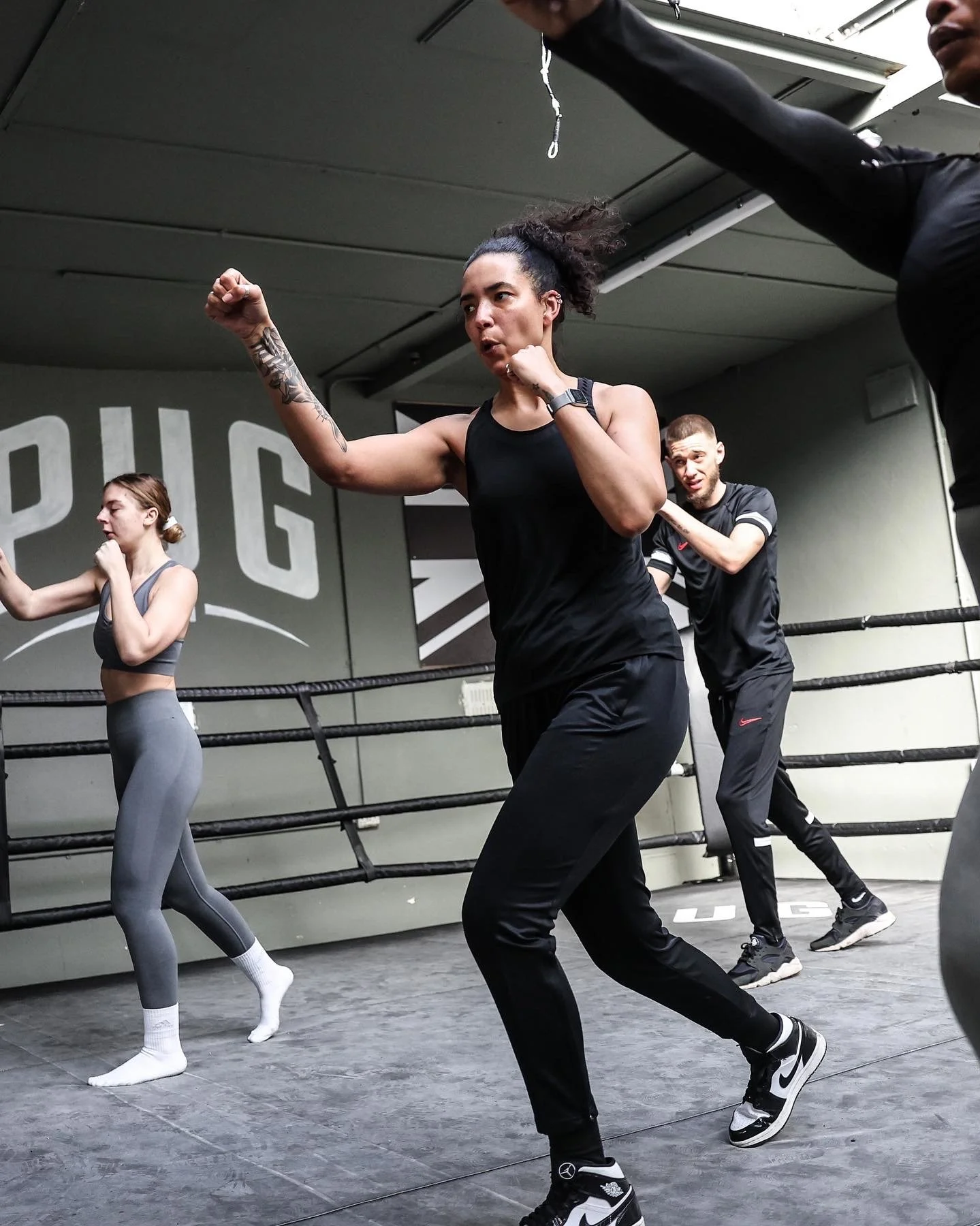
ZERO TOLERANCE FIGHT FACTORY · NORTH LONDON · BBBOFC QUALIFIED COACHING
Let's be completely honest with you. Stepping into a boxing ring knowing someone is going to punch you in the face is a frightening thing. Every time I sparred, I felt nervous. Every single time. And I say that as someone who has competed as an amateur boxer, coached fighters at professional level, and spent years inside this sport. Fear never fully goes away — and anyone who tells you otherwise is lying.
But here is what I also know: fear is not the enemy. How you relate to it is everything. At Zero Tolerance Fight Factory, working with beginners across North Finchley, Camden Town, Hampstead Heath, and Primrose Hill, one of the first real conversations we have with new members is about fear. Not how to eliminate it — but how to understand it, respect it, and ultimately use it.
Why Boxing Feels Frightening — And Why That's Normal
If you've been thinking about trying boxing but something keeps holding you back, there's a strong chance fear is part of that. The fear of getting hurt. The fear of looking foolish. The fear of not being good enough. The fear of what it actually feels like to be hit.
These are not weaknesses. These are completely natural responses to something that is genuinely challenging. Boxing puts you in a position that almost no other sport does — face to face with another person, in a confined space, with the full knowledge that physical contact is coming. Your nervous system responds to that the way it is supposed to. The anxiety you feel before stepping into a gym, before your first sparring session, before your first fight — that is your body preparing you, not betraying you.
The problem is not feeling fear. The problem is what happens when you let it take over.
What Happens When Fear Controls You
In boxing, fear that goes unmanaged shows up immediately and physically. You tighten up. Your shoulders rise, your breathing shortens, your movements become stiff and mechanical. The fluidity and technique you have been drilling in training starts to disappear because your body has shifted into survival mode rather than performance mode.
When you are tight, you are slow. When you are slow, you miss things. When you miss things, you make mistakes. And mistakes in a boxing ring are punished instantly. This is why so many beginners who are technically capable in training look completely different the moment the pressure increases — not because their skill disappeared, but because fear got into the driving seat and took over.
"If you let fear take over, you become tight. When you're tight, you make mistakes. The goal isn't to have no fear — it's to stay calm inside it."
I have seen this happen to fighters at every level. Talented amateurs who freeze under pressure. Strong competitors who train brilliantly but tighten the moment a fight becomes difficult. It is one of the most common and most painful things to watch as a coach — because you know the ability is there. Fear is simply blocking access to it.
My Honest Experience With Fear in Boxing
I want to be straight with you, because I think the boxing world sometimes does people a disservice by pretending that experienced fighters operate without fear. They don't. I didn't.
Every time I prepared to spar — even after years in the sport — there was nervousness. A tightness in the chest before it started. A moment where part of my mind asked whether this was a good idea. That feeling never completely vanished. What changed, over time and through experience, was my relationship with that feeling.
I stopped trying to make the fear go away and started treating it as information. Nerves before sparring meant I cared. They meant I was engaged, present, and taking it seriously. A fighter who feels nothing walking into a ring is often a fighter who isn't fully switched on. The nervousness, channelled correctly, sharpens you. It raises your awareness, quickens your reactions, and focuses your mind in a way that calm comfort simply cannot replicate.
Learning to breathe through it. Learning to stay loose when every instinct tells you to tighten. Learning to trust your training even when your emotions are pulling in a different direction. That is the real work of boxing — and it happens long before the first punch is thrown.
How to Build a Better Relationship With Fear
For beginners thinking about stepping into a boxing gym for the first time, or anyone preparing for their first sparring session or white collar fight, here is what I genuinely believe helps.
Acknowledge it rather than fight it. Trying to convince yourself you are not scared often makes it worse. Accept the feeling, name it, and let it exist without letting it make decisions for you. The simple act of acknowledging fear rather than suppressing it reduces its power considerably.
Control your breathing. When nerves hit, breathing becomes shallow and rapid. Consciously slowing your breath — deep in through the nose, slow out through the mouth — sends a direct signal to your nervous system that you are not in danger. It is one of the simplest and most effective tools any boxer can develop, and it works inside the ring and far beyond it.
Trust your preparation. Fear thrives in uncertainty. The more confident you are in your training, your technique, and your coach, the less space fear has to expand. This is why proper coaching matters so much — not just for skill development, but for the confidence that comes from knowing you have been prepared properly.
Exposure over time. The first sparring session is almost always the scariest. The second is easier. The third easier still. Fear reduces as experience builds — not because the situation becomes less real, but because your nervous system learns that you can handle it. The only way through is through.
Why Fear Makes You a Better Person — Inside and Outside the Ring
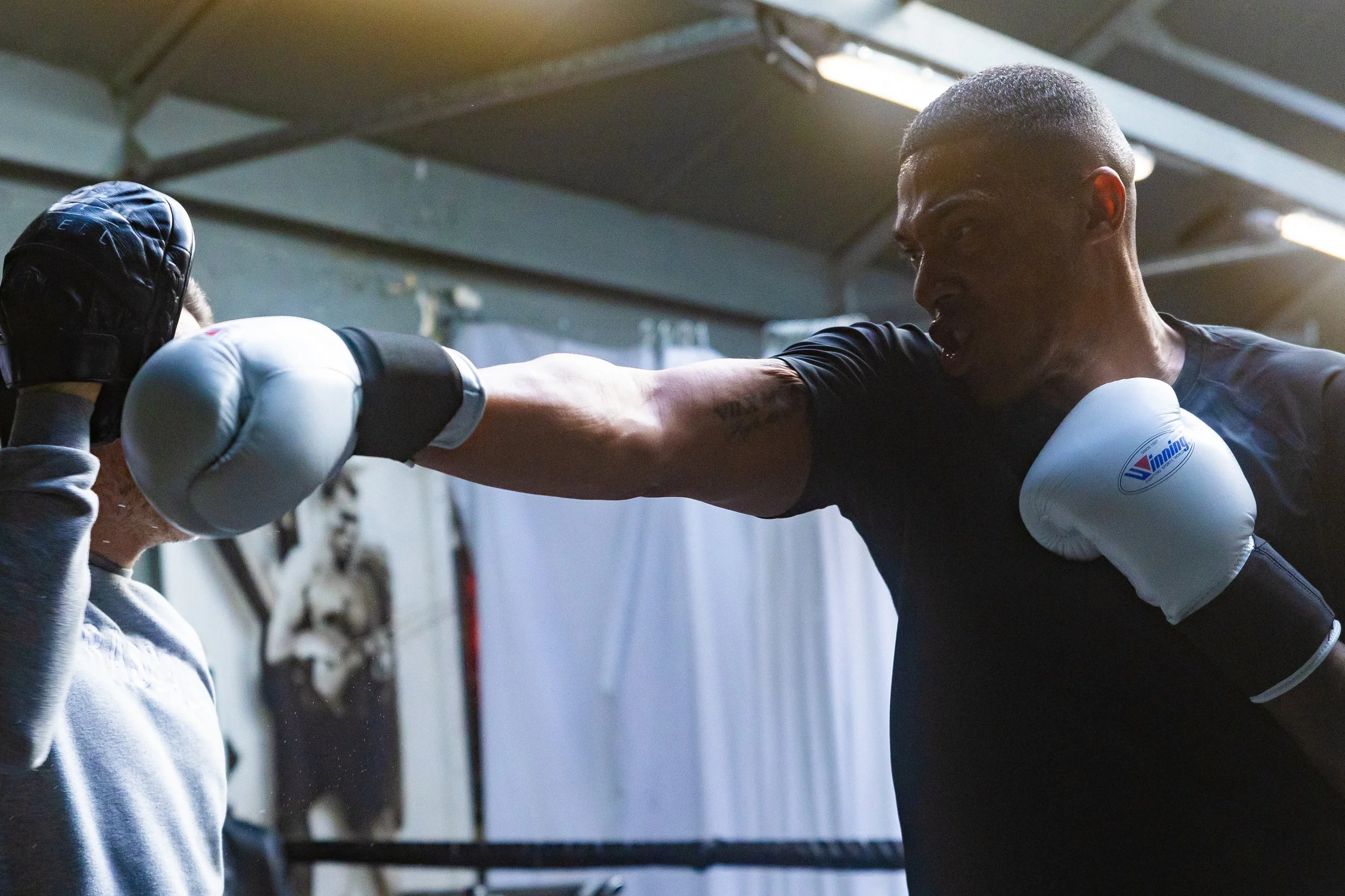
One of the things I love most about boxing — and one of the reasons I have dedicated so much of my life to coaching it — is that the lessons it teaches about fear transfer directly into everyday life. Learning to stay calm under pressure in a boxing ring is learning to stay calm under pressure in a boardroom, in a difficult conversation, in a personal crisis. The composure you develop through training becomes a permanent part of how you operate.
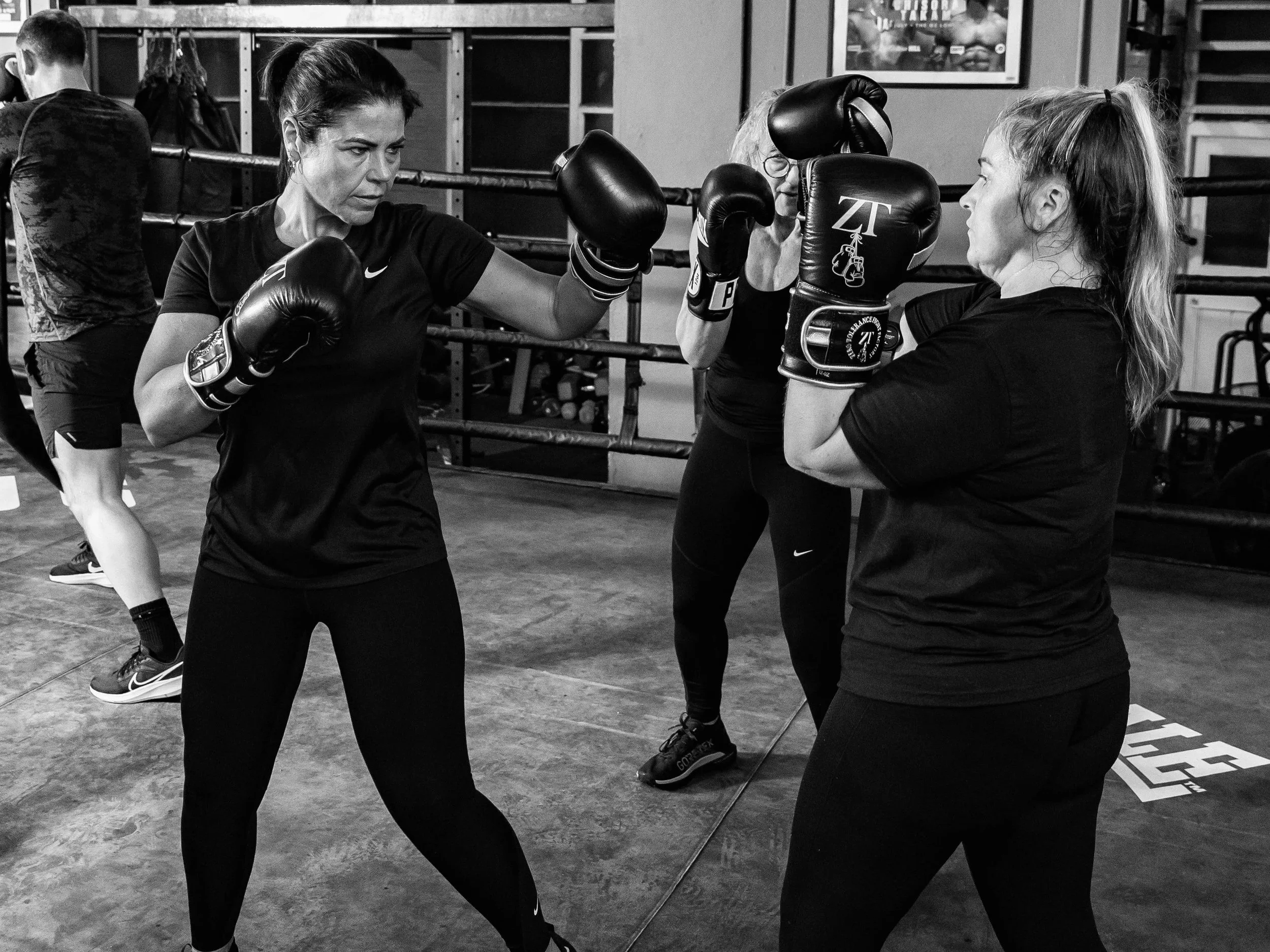
Many of the people who train at Zero Tolerance Fight Factory across North Finchley, Camden Town, Hampstead Heath, and Primrose Hill are not professional fighters. They are people from all walks of life who came to boxing looking for fitness or a challenge — and discovered that what the sport gave them was far more than that. Confidence. Mental clarity. A completely different relationship with pressure and discomfort. A version of themselves they did not know existed.
That transformation begins the moment you decide to walk through the door anyway — even when you are scared.
Frequently Asked Questions About Fear and Boxing
Is it normal to be scared before boxing training?
Completely normal. Even experienced boxers and coaches feel nerves before sparring and competition. Fear is a natural response to a challenging situation. The goal is not to eliminate it but to learn to perform alongside it.
What if I'm scared of getting hurt in boxing?
A good boxing gym introduces contact gradually and safely. At Zero Tolerance Fight Factory, beginners are never thrown into situations they are not ready for. Sparring is introduced slowly, with proper supervision, protective equipment, and coaching guidance at every stage.
How do boxers stay calm under pressure?
Through breathing control, experience, and trust in their preparation. Staying calm under pressure is a skill that is built over time, not something fighters are simply born with. Controlled breathing is the most immediate tool available — it directly regulates the nervous system's response to stress.
Can boxing help with anxiety and confidence in everyday life?
Yes — this is one of the most widely reported benefits of boxing training. Learning to manage fear and stay composed under physical pressure translates directly into greater confidence and emotional resilience in everyday situations. Many people find boxing transformative far beyond the physical results.
Is boxing safe for complete beginners in North London?
Yes. Zero Tolerance Fight Factory welcomes complete beginners across North Finchley, Camden Town, Hampstead Heath, and Primrose Hill. All coaching is delivered by BBBofC qualified and England Boxing certified coaches. Safety and proper development are the foundation of everything we do.
Do I have to spar when I start boxing?
No. Sparring is never compulsory, especially for beginners. Many people train purely for fitness, technique, and personal development without ever sparring. If and when you choose to spar, it is introduced gradually and always on your terms.
Final Word
Fear is not a sign that boxing is not for you. It is a sign that you are human. Every fighter who has ever laced up gloves and stepped into a ring has felt it. The ones who succeed are not the ones who never feel scared — they are the ones who show up anyway, breathe through it, and trust the process.
If you have been thinking about trying boxing but fear has been holding you back, let this be the thing that shifts it. You do not need to have it all figured out before you start. You just need to walk through the door.
At Zero Tolerance Fight Factory, across North Finchley, Camden Town, Hampstead Heath, and Primrose Hill, we will meet you exactly where you are. Nervous, uncertain, and unsure of what to expect — that is perfectly fine. That is where it starts for everyone. What matters is that you come.
Take the First Step — Even If You're Scared
Beginners welcome at Zero Tolerance Fight Factory. BBBofC qualified coaching across North London. No experience needed — just the decision to start.
NORTH FINCHLEY · CAMDEN TOWN · HAMPSTEAD HEATH · PRIMROSE HILL